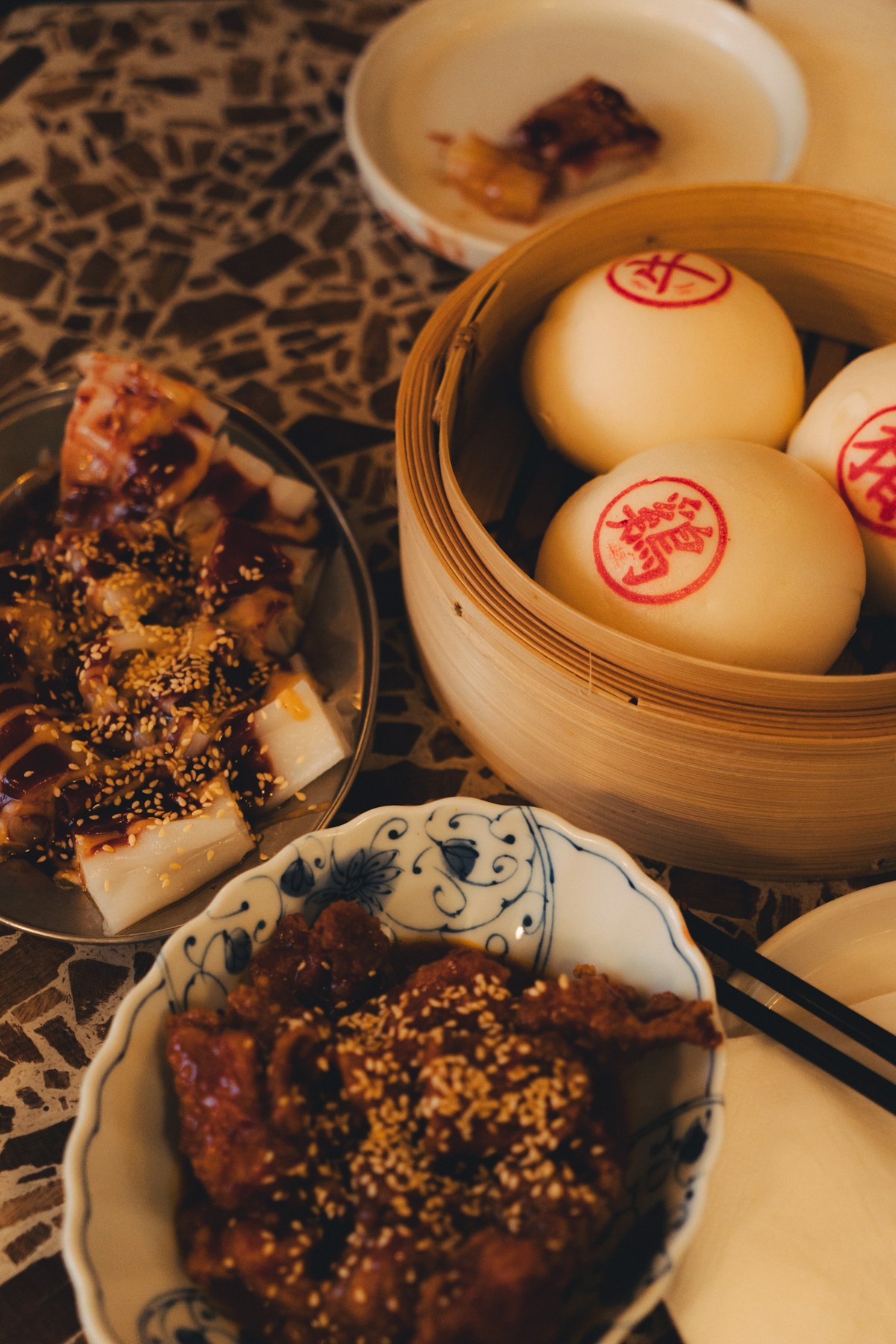
1. Baozi vs. Mantou: Understanding the Foundations
In Chinese culinary tradition, wheat flour steamed breads are divided into two fundamental branches:
- Mantou (饅頭): Plain, unfilled steamed bread. Originating in Northern China where wheat was the dominant grain, mantou is typically folded or rolled into simple oblong or spherical pillows. It has a mild, clean, natural sweetness and a fine, compact crumb. In Cantonese dining, mantou is often sliced, pan-fried, or dipped in sweetened condensed milk.
- Baozi (包子): Filled steamed buns. The term bao means "to wrap." Skilled bakers wrap seasoned savory fillings or silky sweet pastes into circles of yeast dough, pleating the top into delicate folds before placing them in bamboo steamers.
2. The Secret of Cloud-Soft Cantonese Dough
Unlike Western bread which relies on dry heat ovens to produce thick, crispy crusts, Chinese buns are cooked exclusively with wet steam at 212°F (100°C).
The signature texture of Cantonese bakery bao is often described as "cotton-like" or "cloud-soft." This distinct fluffiness comes from carefully bleached low-protein pastry flour, controlled yeast fermentation, and the addition of a touch of sugar and natural fats in the dough. When steamed, the rapid expansion of gas bubbles combined with the moisture-sealed atmosphere prevents crust formation, resulting in an unbroken, paper-thin, pristine white skin.
3. Iconic Savory Fillings
Savory baozi serve as fast, affordable breakfasts and satisfying midday lunches across New York City. The primary varieties celebrated at Golden Steamer include:
- Char Siu Bao (叉燒包): The undisputed king of Cantonese savory buns. Diced roasted pork is simmered with oyster sauce, hoisin, soy sauce, and aromatic five-spice. The sweet-savory filling creates a rich sauce that seeps slightly into the surrounding white dough.
- Pork & Vegetable Bun (菜肉包): Ground pork mixed with finely minced Shanghai bok choy or Chinese cabbage, scallions, ginger juice, and sesame oil. This bun offers a juicy, lighter savory profile with clean herbal notes.
- Dai Bao / Big Bun (大包): A banquet-style jumbo bun stuffed with pork, cured Chinese lap cheong sausage segments, hard-boiled egg quarters, and shiitake mushrooms. A complete meal wrapped inside a single bun.
4. Sweet Buns & Modern Cult Favorites
While savory buns are world-famous, sweet steamed buns hold a special place in the hearts of bakery patrons:
- Pumpkin Steamed Bun (南瓜包): Golden Steamer’s signature creation. The vivid golden-yellow dough is naturally colored with pumpkin, hugging a smooth, velvety pumpkin puree filling. Mildly sweet and deeply comforting.
- Salted Egg Yolk Lava Bun (蛋黃流沙包): A relatively modern Cantonese dim sum invention. Rich butter and egg custard are blended with cured salted duck egg yolks. When served piping hot, the center melts into a luxurious molten lava with an intoxicating balance of sweet and savory richness.
- Sweet Red Bean Bun (豆沙包): A timeless classic dating back hundreds of years, made with slow-simmered adzuki beans ground with pure cane sugar into a silky, dark paste.
5. The Cultural Role of Chinatown Bakeries
In Manhattan Chinatown and across Brooklyn’s 8th Avenue and 86th Street corridors, bakeries like Golden Steamer provide more than just food; they are social and community anchors. Early every morning starting at 7:00 AM, neighborhood seniors, construction workers, students, and tourists line up at the counter for quick, affordable takeout that costs just a few dollars.
Whether grabbed for a quick subway commute or brought home by the dozen in frozen bulk bags for family breakfast, Chinese steamed buns remain an enduring emblem of culinary comfort.